Harm Reduction: A Smarter Way to Think About Substance Use
Most people have heard the message: just stop. Don't use. Stay clean. It sounds simple. But if you've ever struggled with addiction — or loved someone who has — you know that message often does more harm than good.
Harm reduction takes a different approach. And it works.
What Is Harm Reduction?
Harm reduction is a set of practical strategies designed to reduce the negative consequences of substance use. It doesn't require someone to be ready to quit. It doesn't demand perfection. It meets people exactly where they are.
The goal is simple: keep people safer, and alive, while they figure out their next step.
This might look like access to clean needles to prevent the spread of bloodborne infections. It might mean having naloxone (Narcan) nearby to reverse an overdose. It might mean access to drug checking services — where someone can test what's actually in a substance before using it — because fentanyl contamination has made the drug supply more dangerous than ever. It might mean HIV and hepatitis C testing so people know their status and can get connected to care. Or it might just mean having one person in your corner who isn't judging you.
None of that means giving up on recovery. It means staying alive long enough to get there.
Why Clean Needles and Testing Save Lives
Sharing needles is one of the fastest ways bloodborne diseases spread. HIV and hepatitis C don't care whether someone is ready to get sober. They move through contaminated equipment silently, and by the time symptoms show up, serious damage may already be done.
Clean needle programs — also called syringe service programs — break that chain. They provide sterile supplies without requiring someone to prove they deserve them. Research is clear: these programs reduce HIV and hepatitis C transmission rates significantly. They do not increase drug use. What they do increase is contact with health services, which means more people eventually find their way to treatment.
Drug testing services work the same way. The illicit drug supply is more unpredictable now than it has ever been. Fentanyl is turning up in substances where people don't expect it — cocaine, pressed pills, heroin. Fentanyl test strips and drug checking sites give people real information about what they're putting in their body. That information saves lives.
And HIV and hepatitis C testing matters because people can't address what they don't know about. Routine, low-barrier testing — offered without shame, in spaces people already trust — connects people to treatment earlier. For hepatitis C especially, there are now highly effective cures. But only if someone knows they have it. This place in Grand Rapids, MI is Red Project.
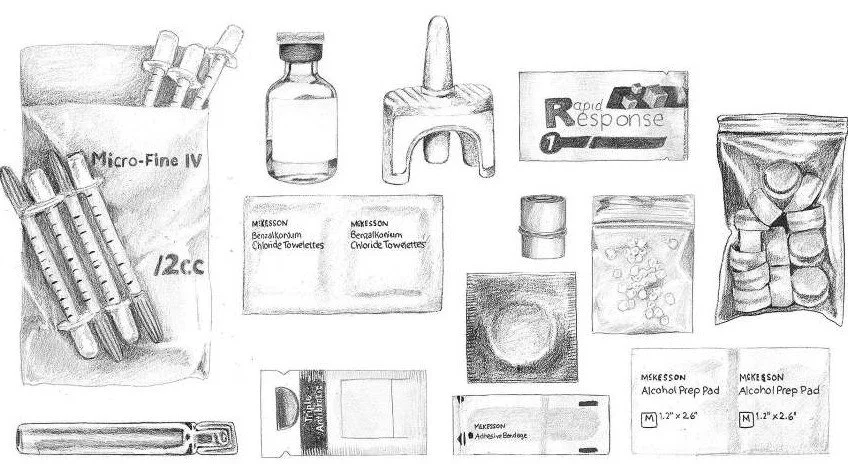
**Photo courtesy of The Grand Rapids Red Project
Why Abstinence-Only Thinking Falls Short
For decades, the dominant message in substance abuse treatment was binary: you're either clean, or you're failing. That framework has caused real damage.
When people believe they've already "blown it," they stop reaching out. They hide. They use alone. And using alone is one of the most dangerous things a person can do.
Shame is not a treatment strategy. Research consistently shows that stigma drives people away from care — not toward it. When someone fears judgment more than they fear the substance, we've already lost them.
Abstinence is a valid goal. For many people, it's the right one. But it can't be the only door into support.
Harm Reduction Is Evidence-Based
This isn't a fringe idea. Harm reduction is supported by decades of public health research and endorsed by organizations including the CDC and SAMHSA.
Needle exchange programs reduce HIV and hepatitis C transmission without increasing drug use. Medication-assisted treatment (MAT) with buprenorphine or methadone dramatically improves outcomes for people with opioid use disorder. Drug checking services give people actionable information. These tools don't enable addiction. They prevent death.
Here in Michigan, organizations like the Grand Rapids Red Project offer clean supplies, naloxone distribution, HIV and hepatitis C testing, and connection to care — without requiring someone to be ready first. That kind of low-barrier access matters enormously when the alternative is no access at all.
What This Looks Like in Therapy
As a therapist specializing in substance abuse counseling in Grand Rapids, I work with people at every stage — those who want to stop completely, those who aren't sure yet, and those who are simply trying to survive right now.
Harm reduction isn't a license to use. It's a foundation for honest conversation.
When a client doesn't feel judged for where they are, they can start to look at why they're there. What the substance is doing for them. What pain it's managing. What needs aren't being met. That's where real therapeutic work begins.
Substance abuse therapy grounded in harm reduction creates space for that honesty. It removes the performance of recovery and replaces it with actual exploration.
That's not soft. That's smart.
The Bigger Picture
Addiction is not a moral failure. It's a response — often a very logical one — to pain, trauma, unmet need, or neurological wiring that makes substances feel like the only relief available.
When we treat people with that understanding and care, outcomes improve. People stay engaged in care longer. They're more honest about their use. And when they are ready to make changes, they have a relationship — with a therapist, a program, a community — to support that.
Harm reduction says: your life has value right now. Not after you get clean. Not once you've earned it back. Right now.
Ready to Talk?
If you or someone you care about is struggling with substance use, you don't have to have it figured out before reaching out. Substance abuse therapy in Grand Rapids, MI or virtual in MI, FL, and AZ is available for people at every stage — no judgment, no pressure to perform recovery before you're ready.